Thursday, July 18, 2013

Students should experiment first

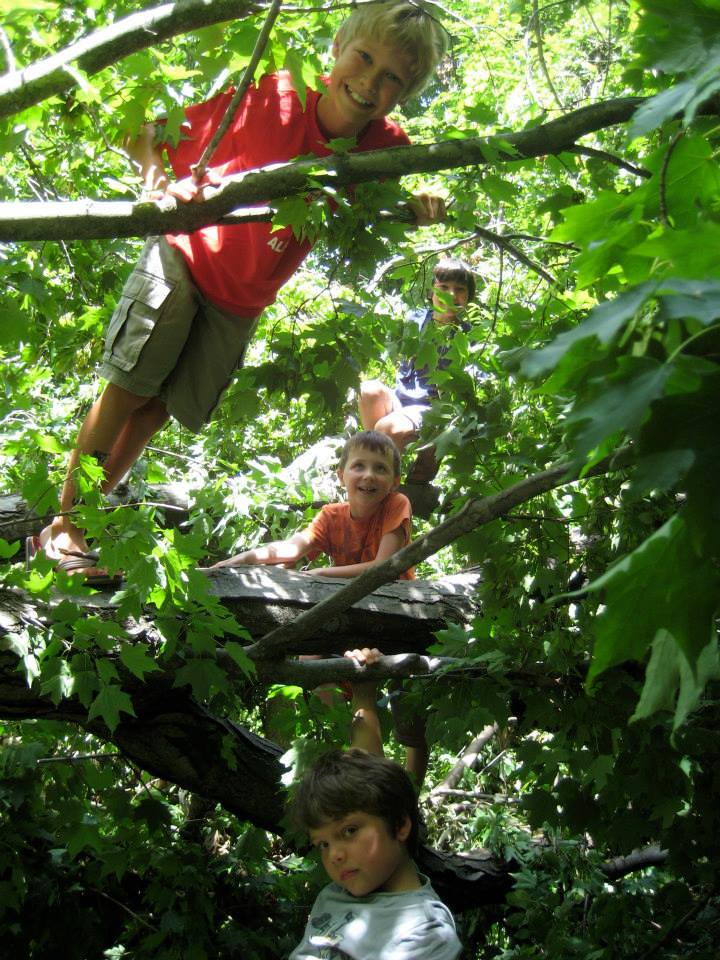
At Robotics Camp, everyone is experimenting!
“We are showing that exploration, inquiry and problem solving are not just ‘nice to have’ things in classrooms. They are powerful learning mechanisms that increase performance by every measure we have.”

Research at Stanford shows that students who experiment first, before they read about a topic or watch a video, improve their learning substantially.  It's great to have proof of the importance of this sequence of presenting lessons.  Hands-on familiarity with materials gives students a context in which to organize thoughts and it deepens what they learn.


Monday, July 15, 2013

Breaking the mold

On Friday I was witness to a wild game of Spartans vs Romans as kids ran through the woods between two gigantic fallen trees with spear-like sticks in hand.  "We are the Spartans and we are on the attack!"  A fleet of running children streamed into the Roman's tree when suddenly the cry rang out "Retreat!"

The utter joy and the crazy and spontaneous changes in the direction of runners, abandoned stand-offs, and altering fortunes of both sides made for thrilling viewing.  It reminded me of days in the (distant) past when I was a kid racing through backyards with abandon in the ever evolving games of a neighborhood throng.

In reading this article in MindShift, Breaking the Mold: School Fosters Design and Discovery I remembered what I love at Parker: the freedom to make school be about discovery, excitement and fun.  These past weeks at camp, kids have built shelters, gone tearing through the woods in "Capture the Chicken", labored through many iterations of design and programming to make a LEGO robotic dog's tail wag, and designed troll huts and fairy houses by the creek.  Everyone's imagination is sparked and everyone is participating and pushing themselves in some way.

The school year has more structure for sure, but the elements of choice within a theme and freedom within the structure remain.  Learning is richly full of questioning and imagination, with skill-building layered within to give students the tools to explore further.  Learning has a distinct purpose.

Education speaker Will Richardson says "We don't need schools to be better, we need schools to be really, really different."  Camp is a great model for how different  - and how exciting - learning can be.


Tuesday, July 9, 2013

Engagement in school leads to success in life


Building and launching rockets; creating LEGO robots and programming them to flip; constructing a shelter in the woods - this is engaging learning.  It's fun!  

New research shows that children who feel interested and engaged in school show greater success professionally over and above academic attainment or socioeconomic background. I'd wager that the same holds true for engagement at camp!


Children's interest and engagement in school influences their prospects of educational and occupational success 20 years later, over and above their academic attainment and socioeconomic background, researchers have found.

Read more at: http://phys.org/news/2013-06-school-engagement-success-life.html#jCp
Children's interest and engagement in school influences their prospects of educational and occupational success 20 years later, over and above their academic attainment and socioeconomic background, researchers have found.

Read more at: http://phys.org/news/2013-06-school-engagement-success-life.html#jCp
Children's interest and engagement in school influences their prospects of educational and occupational success 20 years later, over and above their academic attainment and socioeconomic background, researchers have found.

Read more at: http://phys.org/news/2013-06-school-engagement-success-life.html#jCp

Thursday, June 20, 2013

Summer!

Catching butterflies

Once Upon a Mattress, Jr! (...that's "FRED")
The wonderful variety of camp! 

Monday, June 17, 2013

The un-classroom


The Best Science Classrooms Aren't Classrooms says John Spencer in education rethink.  This week at camp, kids will be out collecting pollinators, exploring the fields and woods and following Parker's honey bees.  The spark of curiosity comes easily when kids are guided in inquiry in the great outdoors - right here in our 77 acre classroom.

Wednesday, June 12, 2013

What makes kids smarter?

6-7's turn a study of sound waves into a jam band of wacky self-made instruments.
If you do nothing else today, read Eight Ways of Looking at Intelligence by Annie Murphy Paul in MindShift.  The article talks about having a different mindset about what can make us smarter: relationships, expertise, even our bodies. 

Great news for us at Parker - I love it when science catches up with what we are doing here.  Daily we watch as children's intellects grow within an environment that values and cultivates friendships, deep learning, lots of movement, and self-regulation. 

This year we watched a reluctant third grade writer, because he believed he could do it, achieve his goal to pen five essays for one Show of Work, and then go on to teach his class how to create a PowerPoint.  We listened to an eighth grader, who as a fifth grader wouldn't walk through the math room door, tell with pride how because of the belief of her math teacher she came to believe in herself.

...a feeling of belonging is critical to the full expression of students’ ability and intelligence.  These eight ways to look at intelligence are a powerful lens for our school's mission to inspire curiosity and a passion to achieve.


Tuesday, June 11, 2013

Graduation and the start of summer

Our happy 8th grade graduates posed as a class for a final time before delivering moving speeches at Graduation.

Campers celebrate a break in the rain...by getting wet!

Tuesday, June 4, 2013

Monday, June 3, 2013

How do we teach creativity?

Teams in K-1 designed and built bridges to support a cup of sand.

It worked!!!
The best creative works happen when we are trying to explore our world and make sense out of life. It is that sense of purpose that propels the creative process. 

So says John Spencer in Ten Things I've Learned About Creativity, a blog post in Education Re-Think.  He also says that creativity takes a lot of courage - the courage to overcome the insecurity of being wrong.

The kind of school atmosphere that Parker has, the kind that allows for re-do's, re-thinks, and do-overs as a regular part of learning is crucial for creativity to blossom.  Doing multiple drafts of a piece of writing, perseverance in LEGO Robotics, teams charged with real challenges, all these experiences accumulate to form a creative mindset. 

Spencer also says the joyful exuberance of play is often involved in creative endeavors.  You can see it in the children's faces in the photos - shared purpose, experimentation, the give and take of a small group:  it's pretty apparent how we teach creativity!

Friday, May 31, 2013

The products of deep inquiry


Rapid-fire movie trailers, interesting essays, cultural dances, colorful weaving, informative posters, life-sized hand-sewn animals, ethnic recorder music, vividly painted huts and dragons, green-designed homes, power-point shows, Masai poetry...

K-1 and 2-3 students showcased their knowledge and connections to Africa and China through all the disciplines and in the most wonderful of ways.  This morning each class presented a Show of Work to the Parker community. 

Also today: a final band performance and assembly, assignments for field day teams, finishing touches on graduation speeches... How did the end of the school year come so fast?!