Showing posts with label technology. Show all posts

Friday, January 6, 2017

Developing STEMpathy


Disruptive technology surrounds us: self-driving cars, software that writes poetry, drones delivering packages...When machines are competing with people for thinking, what's a human to do?!

Thomas Freidman has been thinking about this, and in his recent article From hands to heads to the hearts he answers that humans have what computers don't - a heart.  He writes that everyone needs STEMpathy to succeed in this new age.

The attributes that can't be programmed are the ones we must develop in school, like passion, character and a collaborative spirit.  It is crucial to combine knowledge with heart to if we want students to thrive in the technical age we live in.

It's a reminder of the importance of Parker's core values and mission, the right ones for our age, or any age.

This morning five alumni from 2008 and 2013 visited for a panel discussion.  Represented were an art teacher and a novelist, a future biochemist, a future biomedical engineer, and a budding labor relations specialist.   Their empathy was evident and the values and advice they espoused were about the importance of being friends with people who want to make you better, building relationships with teachers, and finding activities, clubs and subjects that you feel passionate about.  They are all serious about ideas and value learning over grades.

They loved the fun they had at Parker - playing in the stream and being outdoors.  They valued the friends and teachers.  The thesis project was defining and prepared them for writing everywhere, even in college.   They learned to learn for learning's sake, and felt proud of it.  These young adults were definitely skilled in STEMpathy.


Thursday, September 10, 2015

Technology in our children's lives


Have iPads replaced conversation at the dinner table?  What do infants observe when their parents are on their smartphones?  Should you be your child's friend on Facebook?

In her terrific book, The Big Disconnect, Catherine Steiner-Adair writes about our dilemma as parents and educators: How do we find the right balance with our own and our children's technology use?  She walks us through these tricky waters with evidence based on interviews with hundreds of children and families and the latest neuroscience research.

I hope you will read this book.  I couldn't put it down.  It speaks directly to our worries about how a toddler's brain is affected by screen time. About how we need to heighten our attention to our tweens and teens and what their hidden internet lives are.  She helps us grapple with whether to give our second graders iPads.  And how to set limits for ourselves and our kids.

Steiner-Adair is practical and sensible and the book is a great read.

We will have two discussion sessions at Parker using this book as a jumping off point.  You don't have to read the book to participate, but it would be great if you read even one of the chapters. I'll be there and I'll recruit a teacher or two to weigh in.  Let's talk about these issues together!

Tweens,Teens and Technology
Wednesday, October 7
5:00 - 5:45 PM in the Library

Connected Lives - Ages 3 to 10
Thursday, October 15
8:30 - 9:15 AM in the Library

Let me know if you are interested in a later evening time for another session!  mtaylor@parkerschool.org

Monday, October 28, 2013

Balancing act

Here is a great article by Nicholas Carr in the Atlantic: All Can Be Lost: The Risk of Putting Our Knowledge in the Hands of Machines.  Carr talks about the tightrope we walk between letting technology do things for us and retaining the ability to become expert at doing things ourselves.

When you engage actively in a task, you set off intricate mental processes that allow you to retain more knowledge. You learn more and remember more. When you repeat the same task over a long period, your brain constructs specialized neural circuits dedicated to the activity. It assembles a rich store of information and organizes that knowledge in a way that allows you to tap into it instantaneously. Whether it’s Serena Williams on a tennis court or Magnus Carlsen at a chessboard, an expert can spot patterns, evaluate signals, and react to changing circumstances with speed and precision that can seem uncanny. What looks like instinct is hard-won skill, skill that requires exactly the kind of struggle that modern software seeks to alleviate.

As we struggle to find a balance for our kids and ourselves between the incredible positive effects of technology v.s. the myriad ways it isolates us from hands-on experience, this article provides an interesting viewpoint.  We can continue to explore together!

Tuesday, October 22, 2013

Learn to code, code to learn

Teresa Ferrer-Mico, our former science and math teacher is teaching Parker kids programming with Scratch in Computer Club on Fridays.  It's part of the research for her doctoral dissertation - and kids are loving it.  As MIT's Mitch Resnick says in his latest TED talk, "When you learn to code, it opens up for you to learn many other things."


Thursday, March 21, 2013

What are apps doing to children's brains?

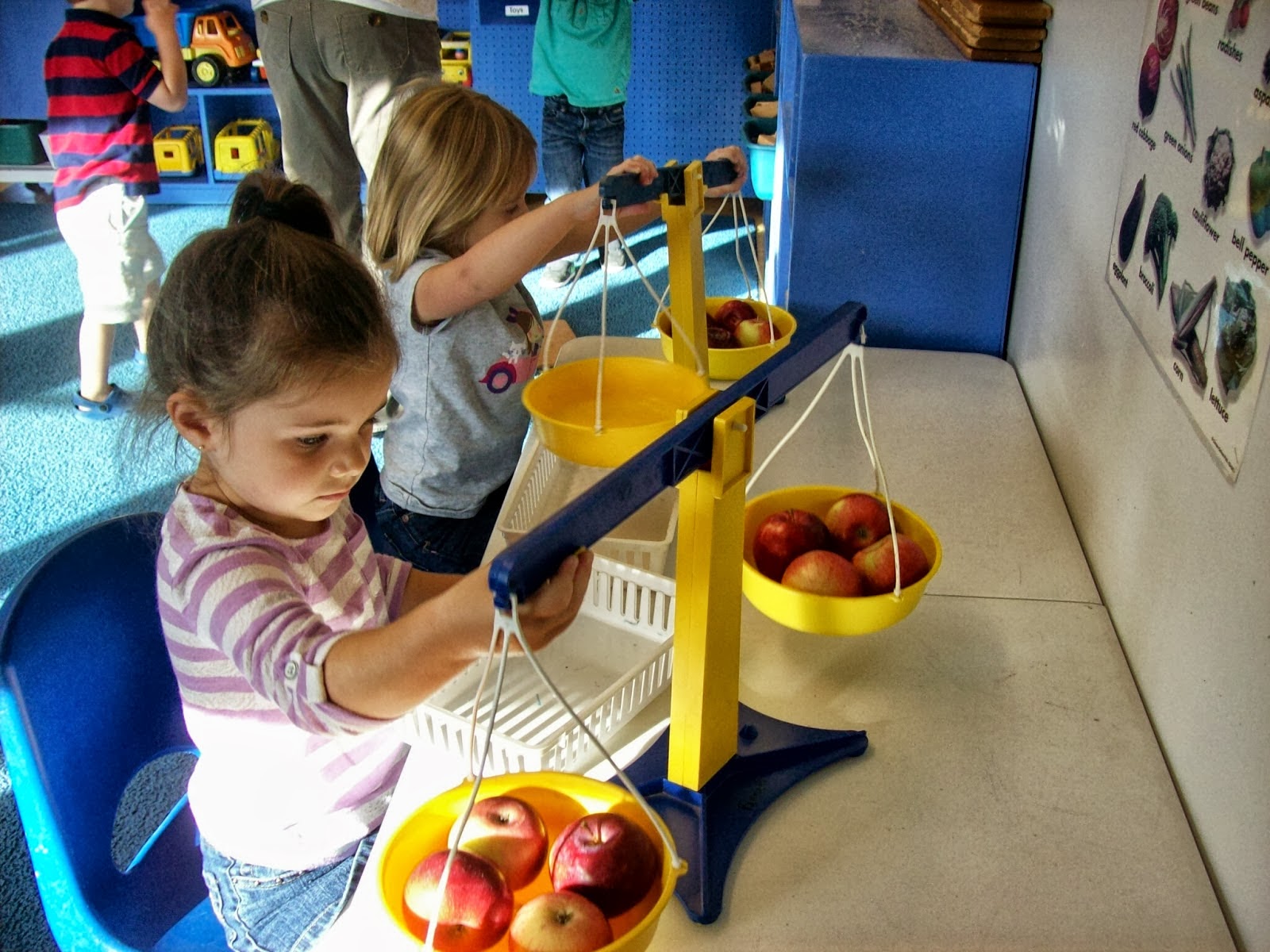
Sixth graders construct a Rube Goldberg machine, using hands-on problem-solving skills to explore forces of motion and make a simple task complicated.
The Touch Screen Generation by Hanna Rosen in the latest Atlantic gives a Mom's eye view of the controversies around kids and apps.  How much screen-time is OK?  How do you weigh educational apps vs games?  But the viewpoint the author leaves out is the one brought to us by JoAnn Deak: what does neuroscience show us about how the brain develops?  Dr. Deak shared the research showing that the brain's windows of opportunity for growth, once closed are pretty much closed forever.  She recommended little to no screen time for kids younger than 5.  (She does give a break to parents of a screeming toddler on the plane - just hand them the i-pad for heavens sake! - but she urged caution.)

Dr. Deak told us that the use of technology has allowed the visual part of children's brains to be as well developed as a muscle-builder's biceps, allowing other areas of perception to wither, like  listening and imagining.  We can counteract some of this effect at school, by building in time for the natural pursuits of childhood: lots of physical activity, discovery and plenty of human interaction.  Read stories without showing the pictures at first, so the visual part of the brain doesn't take over and audio comprehension is strengthened, she advised.

It is actually a comfort to know that with the latest neuroscience research we can actually find out what happens to a brain saturated with apps - and not just guess.  As educators and parents who want the best for our kids, we can continue to investigate this together!  I'm pretty sure we haven't heard the last word...

Friday, November 30, 2012

BYOD


There is a new trend in schools: BYOD (Bring your own device).  It seems to be working informally at Parker.  With a variety of desktops and laptops available at school and the i-Pads and laptops some students and teachers bring with them, not to mention calculators and smart phones, we've got a lot of tools.  At our recent professional development day, we were able to successfully connect 20 or so computers, pads and phones to explore internet based communication sites and apps all day.  Everybody is experimenting - teachers and students - to see what works best.  Prezi or PowerPoint; Animoto or i-Movie?  It is great to be in it together.